
By Catherine Gray
When people think about investing, they often focus on industries like technology, healthcare, renewable energy, or real estate. These sectors are essential because they improve our quality of life, create jobs, and generate economic growth. Yet there is another sector that deserves far more attention from investors—not simply because of its economic potential, but because of its profound influence on society. That sector is the arts.
Theater, film, television, music, literature, and digital storytelling are often categorized as entertainment, but they are much more than that. They are cultural infrastructure. The stories we tell shape how we understand ourselves, how we relate to one another, and how future generations define what is possible. Long before ideas become policies or movements, they are introduced through stories. Artists have always helped societies imagine a different future, challenge long-held assumptions, and create empathy across experiences that might otherwise remain invisible.
Stories Shape How We See the World
Every generation grows up surrounded by stories. They come through films, stage productions, novels, documentaries, podcasts, and streaming series. These stories influence how we think about leadership, family, justice, innovation, relationships, and resilience. They introduce us to cultures we have never experienced and perspectives we might never have considered. More importantly, they remind us that while our experiences may differ, our humanity is shared. Some of history’s most influential cultural shifts were first introduced through creative works. A powerful documentary has the ability to expose injustice in ways that statistics alone cannot. A thoughtfully written screenplay can humanize complex issues that once felt distant. A theatrical production can challenge audiences to reconsider their assumptions while creating conversations that continue long after the curtain falls. Stories reach people emotionally before they reach them intellectually, making them one of the most effective catalysts for lasting cultural change.
Investing in Creativity Is Investing in Society
As investors, we often evaluate opportunities based on financial returns, market trends, and growth potential. Those metrics matter, but investing also reflects our values. Every investment represents a belief in a particular vision of the future. When we invest in entrepreneurs, we invest in innovation. When we invest in healthcare, we invest in well-being. When we invest in the arts, we invest in the ideas, conversations, and experiences that shape society itself. Creative projects rarely come to life without financial support. Behind every memorable film, award-winning documentary, Broadway production, or groundbreaking independent project is someone who believed in the vision before anyone else did. Investors make it possible for writers to write, directors to direct, actors to perform, and producers to transform ideas into experiences that reach millions of people. Their role extends far beyond providing capital; they help determine which stories have the opportunity to exist at all.
The Importance of Supporting Diverse Voices
One of the greatest opportunities for today’s investors is expanding access to funding for creators whose perspectives have historically been overlooked. For many years, talented filmmakers, playwrights, authors, and producers struggled not because they lacked compelling stories, but because they lacked access to the networks and capital needed to bring those stories to life. As a result, audiences missed countless perspectives that could have enriched our understanding of the world.
Today, investors have an opportunity to help reshape that landscape. Supporting women filmmakers, emerging creators, independent artists, and storytellers from diverse communities is not simply about representation—it is about strengthening the quality of storytelling itself. The broader the range of voices contributing to our cultural conversation, the richer and more authentic that conversation becomes. Great storytelling thrives when different experiences are welcomed rather than overlooked.
The Arts Are an Economic Driver
The impact of the arts extends well beyond cultural influence. Creative industries are significant contributors to the global economy, supporting millions of jobs across production, design, marketing, technology, tourism, hospitality, education, and countless other sectors. Every film or theatrical production creates opportunities for hundreds—sometimes thousands—of professionals, from cinematographers and costume designers to editors, composers, graphic artists, publicists, and local businesses that support production.
Communities also benefit economically when creative projects flourish. Productions bring tourism, stimulate local economies, create educational opportunities, and attract additional investment. The arts are not separate from economic development; they are an important engine of it. When investors recognize this broader impact, they begin to see arts funding not as charity, but as strategic investment in both economic vitality and cultural enrichment.
Film and Theater Have the Power to Build Empathy
What makes storytelling unique is its ability to create empathy. Facts inform us, but stories allow us to feel. A two-hour film can transport audiences into experiences they may never encounter personally. A live theatrical performance creates a shared emotional experience that reminds us of our common humanity. Documentaries preserve history while encouraging us to engage with difficult truths. These experiences often stay with audiences for years, influencing how they think, vote, lead, parent, and engage with their communities.
This emotional connection is one reason the arts have always played an essential role during periods of social change. Stories give people language for experiences they have struggled to articulate and provide hope by showing that transformation is possible. They help communities heal, celebrate, question, and grow.
Investing in Legacy
Many investors hope their investments will leave a lasting impact. While financial success is important, legacy often extends beyond balance sheets. Buildings may eventually be replaced. Products become obsolete. Technologies continue to evolve. Great stories, however, can endure for generations.
A remarkable film can inspire audiences decades after its release. A theatrical production can continue touring around the world, reaching entirely new audiences. A powerful documentary can become part of educational curricula and influence public understanding for years to come. These creative works become part of our collective memory, continuing to shape conversations long after their creators are gone.
Supporting the arts is ultimately about believing that culture matters. It is about recognizing that every generation deserves stories that inspire courage, expand understanding, and encourage compassion. Investors have a unique opportunity to help ensure those stories are created, shared, and preserved.
Looking Ahead
The future will be shaped not only by technological breakthroughs or economic innovation, but also by the stories that define our values and inspire our decisions. Every investment in the arts helps make those stories possible. It supports creators willing to challenge assumptions, celebrate humanity, and imagine better futures for us all.
When we choose to invest in theater, film, television, music, literature, and other creative endeavors, we are doing far more than supporting entertainment. We are investing in culture, education, empathy, and possibility. The stories we fund today become the stories that shape tomorrow’s leaders, innovators, families, and communities. Few investments have the power to influence both hearts and minds in such enduring ways, which is why investing in the arts remains one of the most meaningful investments we can make.
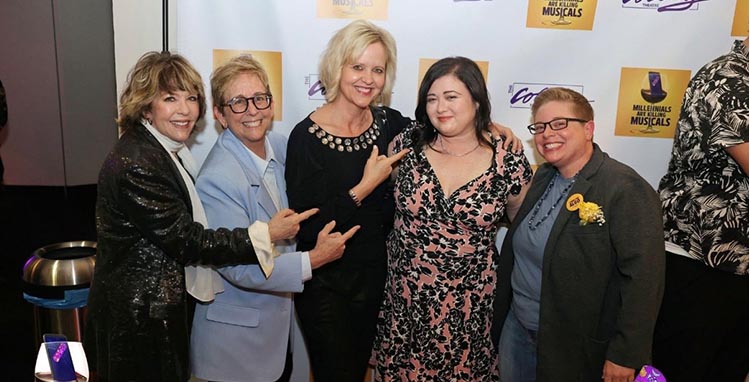
One women-led creative project She Angel Investors is currently supporting is Millennials Are Killing Musicals, an original musical written by Nico Juber, who wrote the book, music, and lyrics. Directed by Tony Award nominee Kristin Hanggi, the show explores single motherhood, identity, and the impact of social media and the algorithm on modern life. Following its 2026 world premiere in Los Angeles, the producing team is exploring a future commercial production in New York. The project reflects the importance of supporting women-led creative work and helping distinctive stories reach wider audiences.
Catherine Gray
Executive Producer,
Show Her The Money
CEO/Founder, She Angel Investors
Keynote Speaker/ Author
Co-Founder-She Angels Foundation
Host Invest in Her Podcast
Watch my Ted talk here!
https://youtu.be/Ms-tROEeLn4