
By Catherine Gray
Artificial intelligence is changing the way we work, communicate, build businesses, and make decisions. It is helping founders move faster, helping teams become more efficient, and giving entrepreneurs access to tools that once required entire departments. From creating presentations to researching investors, refining messaging, and analyzing market trends, AI has quickly become part of the way modern entrepreneurs operate.
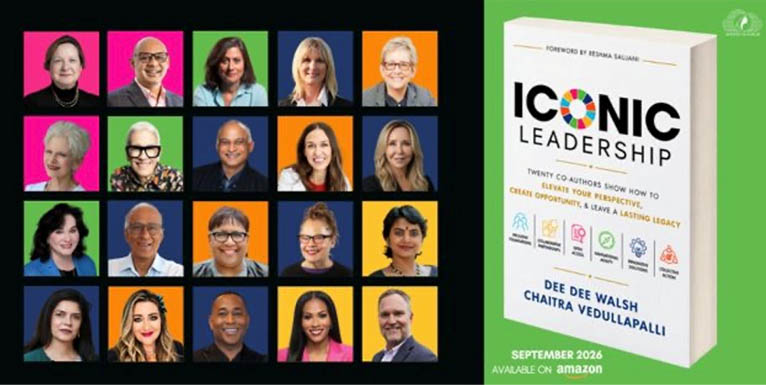
Ai can be a good thing if used properly- and I’m glad to be part of a program called Iconic leadership- headed up by the founder of Women in Cloud – Chaitra Vedullapalli-who has a new book and program to help revolutionize the AI industry.
Here is a link to that book that I’m honored to be featured in:
https://womenincloud.com/iconicleadership/
ICONIC Leadership is grounded in a clear belief: technology can expand what is possible, but people determine why, when, and how. Human judgment, lived experience, domain expertise, trust, and access must remain central to how we lead, build, and make decisions if we want a more human future.
This initiative is focused on trustworthy AI, governance and accountability, public confidence, workforce reinvention, human judgment, domain expertise, and who gets access to the opportunities ahead.
I believe in innovation, and I believe AI can be an incredible force for good if used properly. It can remove barriers, save time, and give founders access to information that would have once taken hours, days, or even weeks to gather. For many entrepreneurs, especially those building with small teams and limited resources, that kind of efficiency can be transformative.
But there is one thing I do not believe AI can fully replace: the power of human connection.
For entrepreneurs, relationships still matter deeply. Access to the right person, the right conversation, or the right room can change the trajectory of a business. AI can help you identify an investor, research that investor, prepare your pitch, refine your messaging, and anticipate the questions you may be asked. What it cannot do is recreate the experience of sitting across from someone who truly understands your vision and decides they want to help move it forward.
The Most Important Opportunities Often Begin With a Conversation
Some of the most meaningful business opportunities begin in ways that are almost impossible to predict. A conversation after a panel can become an introduction. A coffee meeting can turn into a partnership. Someone you meet at a conference may remember your company months later when an opportunity appears that would be perfect for you.
These interactions may feel small in the moment, but they often become the turning points we remember years later. Business relationships rarely develop in a perfectly linear way. Sometimes the person you meet today becomes the person who introduces you to an investor next year. Sometimes a casual conversation becomes a collaboration, a speaking invitation, a customer, or a new strategic partnership.
There is also something different about being physically present with another person. You notice the questions they hesitate to ask. You hear the excitement in their voice when an idea resonates. You understand their body language, their curiosity, and their level of interest in a way that is difficult to fully capture through a screen.
In-person environments also create space for spontaneity. The five-minute conversation before an event begins or the person sitting next to you at dinner may end up being more important than the formal meeting on your calendar. These moments are difficult to schedule, automate, or predict, and that is exactly what makes them so valuable.
Information Is Valuable, But Access Changes Everything
Entrepreneurs today have access to more information than ever before. You can learn how to create a pitch deck, research venture capital firms, build financial projections, write a business plan, prepare for an investor meeting, and study an entire industry without ever leaving your computer.
That level of access to knowledge is extraordinary, but information alone does not create opportunity.
You can know everything about raising capital and still struggle to get into the room with investors. You can have an incredible company and still need someone to make an introduction. You can have a strong pitch deck, a growing business, and impressive traction and still need another human being to believe in your vision enough to open a door.
This matters particularly for women entrepreneurs, who continue to navigate networks and capital ecosystems where access is not always equal. Sometimes the difference between two founders is not the quality of their ideas or the strength of their businesses. The difference is who has access to the people who can help accelerate those businesses.
That is why creating opportunities for founders to meet investors, advisors, partners, and other entrepreneurs remains so important. The goal should not simply be to give women more information about how the system works. We also have to create pathways into the rooms where decisions are being made.
AI Can Help Build the Bridge
This is where I believe AI can be incredibly powerful.
AI can help founders identify investors who may be aligned with their industries, stages, and business models. It can help entrepreneurs better understand the companies in their markets, research competitors, improve their messaging, and prepare more effectively for important conversations. A founder who once had to spend an entire afternoon researching a potential investor can now gather useful information much faster.
AI can also help demystify areas of business that may feel intimidating to first-time founders. It can explain financial terminology, help someone practice investor questions, suggest improvements to a presentation, and help organize a large amount of information before an important meeting.
That preparation can give entrepreneurs a meaningful advantage. It can help someone walk into a meeting feeling more informed, more focused, and more confident in the story they are telling.
In that sense, AI can help build a bridge between a founder and an opportunity. It can help someone identify the right room and prepare to enter it. But once that bridge has been built, people still have to cross it. Technology can create access to information, but human relationships are what often turn that information into action.
Trust Is Still Human
At the center of almost every great business relationship is trust. Investments are built on trust. Partnerships are built on trust. Teams are built on trust. Strong professional networks are built on trust.
AI can assist the process, but it cannot fully manufacture trust.
Trust develops through conversations, consistency, credibility, shared experiences, vulnerability, and time. It happens when someone does what they said they would do. It happens when two people discover that they share a vision or a set of values. It happens when someone watches how you lead your company, respond to challenges, or communicate with your team.
It also happens through repetition. You see someone at one event and then another. You have a conversation, follow up, and continue the relationship. Over time, that person understands not just what you are building, but who you are as a leader.
That kind of familiarity matters in business. Investors are not only evaluating ideas. Partners are not only evaluating proposals. People are also deciding whether they trust the person on the other side of the table.
Technology can make the introduction easier, but the relationship still has to be built by people.
Your Network Is More Than a List of Contacts
As networking becomes increasingly digital, it is easy to confuse connectivity with relationships. We can have thousands of LinkedIn connections, followers, email subscribers, and members of online communities and still have relatively few people who deeply understand what we are trying to accomplish.
A strong network is not simply a database of names.
Your network is made up of people who understand what you care about, know what you are building, and believe enough in your work to mention your name when an opportunity arises. It includes people who will make an introduction, send you an opportunity, recommend you for a panel, connect you with a potential investor, or tell someone else, “You need to meet her.”
That kind of relationship cannot simply be automated. It has to be nurtured over time.
Digital platforms can certainly help us stay connected. They allow us to follow someone’s work, celebrate their accomplishments, share resources, and maintain relationships across cities and countries. But some of the strongest relationships still begin or deepen through real conversations.
There is something meaningful about sitting across from another person and taking the time to understand what they are working toward. Those conversations create context. They give us a deeper understanding of one another that goes beyond a profile page or a list of professional accomplishments.
Sometimes You Have to Leave the Laptop
One of the best things an entrepreneur can do for her business may be surprisingly simple: step away from the screen.
Attend the conference. Go to the dinner. Stay after the panel. Introduce yourself to someone you do not know. Ask another founder what she is building. Tell someone what you are building. Invite someone to coffee. Follow up after you meet.
None of these actions are particularly complicated, but they can have an enormous impact over time.
Relationships compound just like investments do. One conversation leads to another. One introduction leads to another room. One room leads to a new opportunity, and that opportunity may lead to something neither person anticipated when they first met.
It is also important to remember that networking does not always have to be transactional. Some of the best relationships develop when we approach people with genuine curiosity instead of immediately asking what they can do for us.
Ask people about their work. Learn what they care about. Think about how you might be able to support them. Stay connected even when you do not immediately need something.
That is how a contact becomes a relationship.
The Future Is AI and Human Connection
I do not believe the future requires us to choose between technology and relationships. The future is both.
We should absolutely use AI to prepare more effectively, research opportunities, improve our pitches, understand our markets, and save time on the tasks that once consumed hours of our day. Founders should embrace tools that allow them to operate more efficiently and make better decisions.
But then we should use some of the time we save to build relationships.
The more technologically connected our world becomes, the more valuable authentic human connection may become. In a world where almost anyone can generate an email, a pitch, or a polished presentation in seconds, authenticity becomes a differentiator.
People remember how you made them feel. They remember the conversation you had. They remember the story you told. They remember the energy you brought into the room and whether you seemed genuinely interested in what they had to say.
As Maya Angelo says -people won’t remember what you say, but they will remember how you made them feel. And that is the extraordinary difference with in person connections that truly is irreplaceable.
Those memories matter because business opportunities do not always happen immediately. Someone may meet you today and think of you six months from now. An investor may not be ready for your company at the moment but may introduce you to someone else. A founder you meet at an event may become a future partner or customer.
Human relationships have a long shelf life.
AI May Help You Find the Room. You Still Have to Walk Into It.
AI is going to continue transforming entrepreneurship, investing, and business. We should embrace it, learn it, experiment with it, and use it to become better prepared and more efficient.
But we should not confuse efficiency with connection.
AI may help you discover the right room. It may help you identify the people inside that room. It may help you research their backgrounds, understand their interests, and prepare exactly what you want to say when you meet them.
But you still have to walk into the room.
You still have to start the conversation. You still have to listen. You still have to build trust. You still have to follow up and turn that initial interaction into a relationship.
Because sometimes the opportunity you have been searching for is not waiting inside another prompt.
It is sitting across the table from you.
Anyone who knows me knows I’m all about the magic of connecting with like-minded people. That is truly where the richness of being a founder or funder exists- so let’s remember that going forward.
Catherine Gray
Executive Producer,
Show Her The Money
CEO/Founder, She Angel Investors
Keynote Speaker/ Author
Co-Founder-She Angels Foundation
Host Invest in Her Podcast
Watch my Ted talk here!
https://youtu.be/Ms-tROEeLn4