
By Catherine Gray
A New Era for Venture Capital
For most of venture capital’s history, the people making investment decisions looked remarkably similar. The industry became known for its exclusivity—an ecosystem built on networks, introductions, and pattern recognition that often favored founders who mirrored the investors sitting around the table. As a result, countless brilliant entrepreneurs with transformative ideas were overlooked, not because their businesses lacked potential, but because they didn’t fit the traditional mold- or because they didn’t look like the investors.
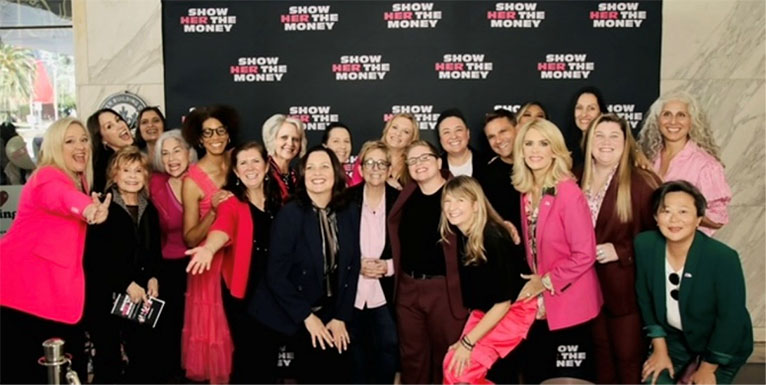
We produced our award winning movie- Show Her The Money – now on Amazon- for that reason. To educate a more diverse group of people about what is venture capital, how it works, why it’s important to our future, and how it can help diverse investors build wealth while making an impact too.
While the conversation has long focused on why women founders receive such a small percentage of venture capital funding, I believe we’re finally asking a more meaningful question: Who gets to become the investor?
That question matters because venture capital does far more than finance companies. Investors determine which technologies receive resources, which founders are given the opportunity to scale, and ultimately which ideas have the chance to shape the future. Every investment creates a ripple effect that extends far beyond a single startup. One successful company creates jobs, inspires future entrepreneurs, generates wealth, and often produces the next generation of investors. When we diversify who is making investment decisions, we diversify innovation itself.
Why More Women Are Launching Venture Capital Funds
One of the most exciting trends I’m seeing is the growing number of women launching venture capital funds, building angel investor networks, and creating investment communities that are opening doors for entrepreneurs who have historically been overlooked.
Many of these women are accomplished founders who understand firsthand the challenges of raising capital. Others spent decades building successful careers in technology, healthcare, finance, media, or corporate leadership before deciding to invest in the next generation of entrepreneurs. They’re bringing deep operational expertise, strong networks, and a fresh perspective to an industry that has historically lacked diversity.
This movement isn’t about investing differently because they’re women. It’s about investing differently because they bring different experiences, recognize different opportunities, and understand markets that have often been underestimated.
As more women become fund managers and angel investors, we are seeing greater investment in sectors such as women’s health, caregiving technology, financial wellness, education, artificial intelligence, mental health, and consumer innovation. These aren’t niche markets—they represent enormous business opportunities that have been underserved for decades.
Pattern Recognition Shapes Every Investment Decision
One of the greatest misconceptions about venture capital is that investing is primarily about spreadsheets and financial models. While data certainly matters, great investing has always been rooted in pattern recognition.
Every investor is constantly asking whether they’ve seen a founder, market, or business model succeed before. Those patterns are influenced by personal experiences, professional backgrounds, and the communities we belong to. When investment teams all share similar perspectives, they’re naturally more likely to recognize similar opportunities.
Innovation, however, doesn’t come from one demographic.
It comes from every community, every industry, and every corner of the world.
Women bring perspectives shaped by careers as founders, executives, engineers, scientists, marketers, physicians, educators, and community builders. Those experiences allow them to identify opportunities that others may overlook—not because they are better investors, but because they see different possibilities.
That diversity of thought leads to stronger portfolios, better decision-making, and ultimately a healthier innovation ecosystem.
Harvard Showed Me the Future of Venture Capital
One of the highlights of this year was my recent visit to Harvard for the Girls Into VC Summit, where I had the opportunity to spend time with students, entrepreneurs, educators, and emerging investors. What struck me wasn’t simply the talent in the room—it was how dramatically the conversation has changed.
Years ago, young women often asked whether they belonged in venture capital. Today, they’re asking how to become venture capitalists.
They’re asking how to evaluate startups, how to build investment theses, how to raise funds, and how they can one day become limited partners or fund managers themselves.
That shift may sound subtle, but it represents tremendous progress.
Representation creates possibility. When young women see successful investors who look like them, venture capital becomes a career they can imagine pursuing. The next generation isn’t waiting for permission to participate—they’re preparing to lead.
Leaving Harvard left me incredibly optimistic because the curiosity was genuine. Students weren’t interested only in funding startups. They wanted to understand how capital can solve meaningful problems, accelerate innovation, and create lasting economic impact.
Girls Into VC Is Building the Next Generation of Investors
Those conversations reinforced why I am so passionate about Girls Into VC. If we want to see more women leading venture capital firms ten years from now, we have to begin building that pipeline today. Too many talented young women have never met a venture capitalist. They’ve never attended a startup pitch competition, reviewed a term sheet, or learned how venture funds operate. Without exposure, even extraordinary talent can miss opportunities simply because no one introduced them to the ecosystem. Girls Into VC exists to change that. Through mentorship, education, networking, and hands-on experiences, Girls Into VC introduces women to the world of startup investing while helping them build meaningful relationships with founders, investors, and industry leaders. It creates a pathway into venture capital that feels accessible, collaborative, and achievable.
The goal isn’t simply to teach financial concepts. It’s to help women recognize that they belong at the investment table and that their perspectives have tremendous value.
Today’s students will become tomorrow’s angel investors, venture partners, fund managers, limited partners, and board members.
That is how ecosystems evolve.
Why This Matters for Innovation
When we expand who controls capital, we expand which ideas receive the opportunity to grow.
Some of tomorrow’s most successful companies are already being built by founders solving problems that previous generations of investors may not have fully understood. Whether those innovations involve healthcare, education, climate technology, AI, caregiving, financial inclusion, or consumer products, diverse investors are often the first to recognize their potential.
Research continues to show that diverse investment teams identify opportunities others overlook. That shouldn’t surprise us. Different lived experiences naturally create different insights into markets, customers, and unmet needs. This isn’t about checking boxes. It’s about making smarter investment decisions.
Looking Ahead
Artificial intelligence is lowering the barriers to entrepreneurship. Technology is making it easier than ever to launch companies. As innovation accelerates, the venture capital industry has an opportunity to evolve alongside it.
I believe the next decade will produce more first-time women fund managers than any period in history. We’ll see more successful founders become investors, more corporate leaders launch funds, more universities introduce students to venture investing, and more organizations create pathways for women to participate in building the innovation economy.
When I think about the future of venture capital, I don’t simply see more women raising funds. I see more breakthrough companies receiving the capital they deserve. I see more communities participating in innovation. I see more collaboration, broader perspectives, and stronger businesses.
Most importantly, I see an industry recognizing that great ideas can come from anywhere—and that the people funding those ideas should reflect the diversity of the world they’re working to improve.
That future isn’t decades away.
It’s already here, and it’s being built every day by women who are choosing not only to start companies, but to start venture capital funds that will empower generations of entrepreneurs to come.
It’s also why we just launched our VC 101 college program. More about that next month! But here’s an overview on our site
https://showherthemoneymovie.com/impact/college_program/
Catherine Gray
Executive Producer,
Show Her The Money
CEO/Founder, She Angel Investors
Keynote Speaker/ Author
Co-Founder-She Angels Foundation
Host Invest in Her Podcast
Watch my Ted talk here!
https://youtu.be/Ms-tROEeLn4